Flying Lead Changes in Wind's Heartbeat
21 Jan 2026 - Leslie Apland
When to Transition Canter Leads
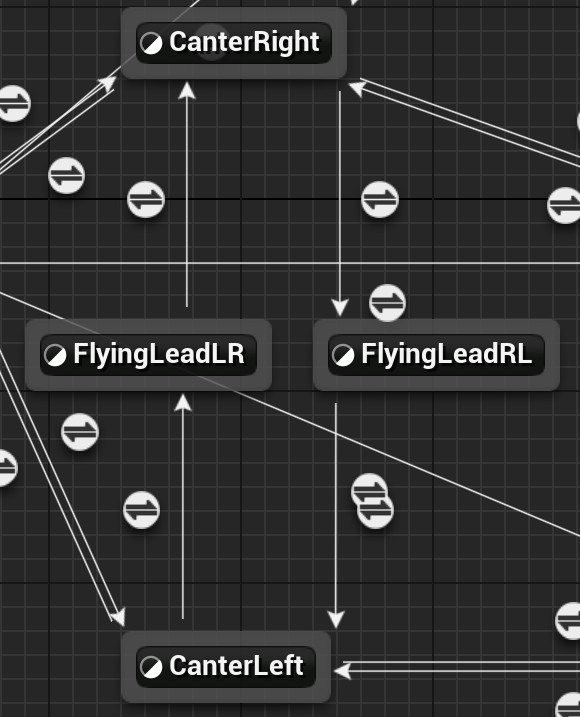
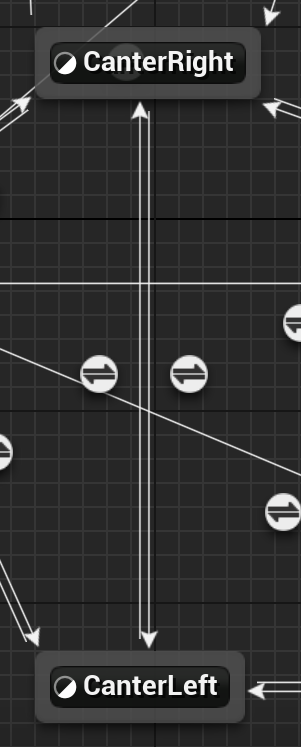
Here's our Animation Blueprint State Machine at this time:
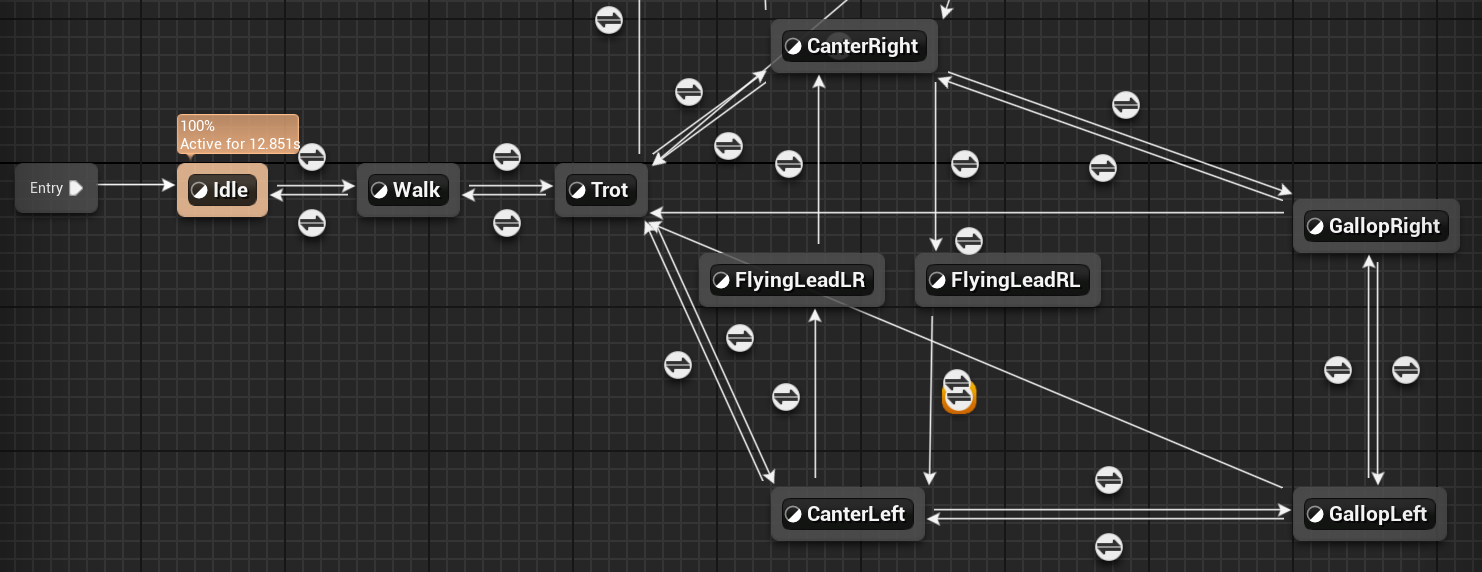
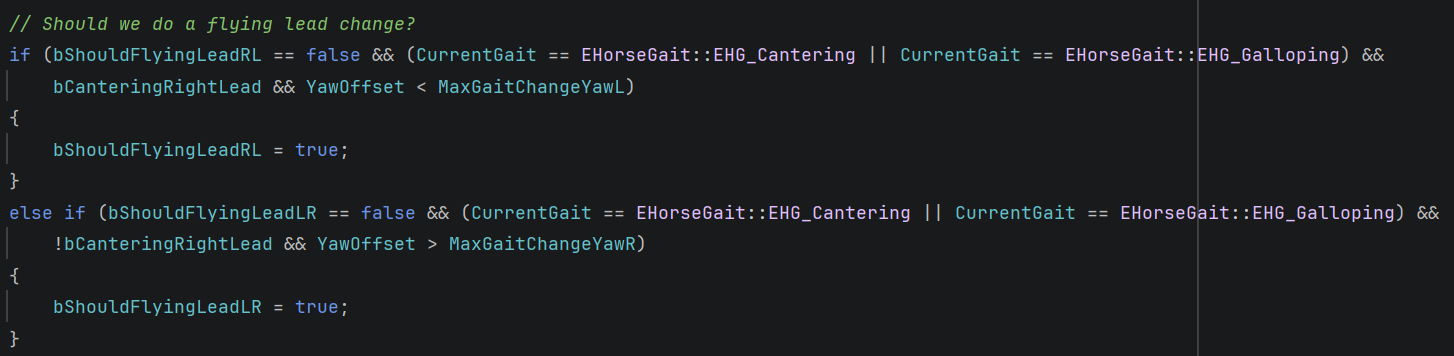
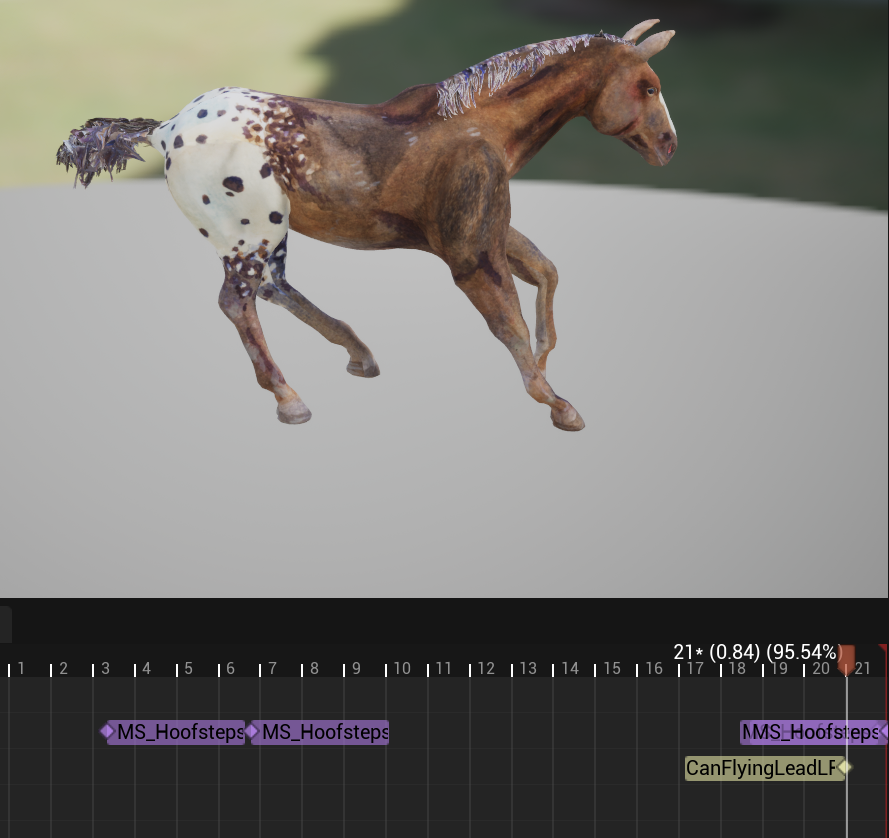
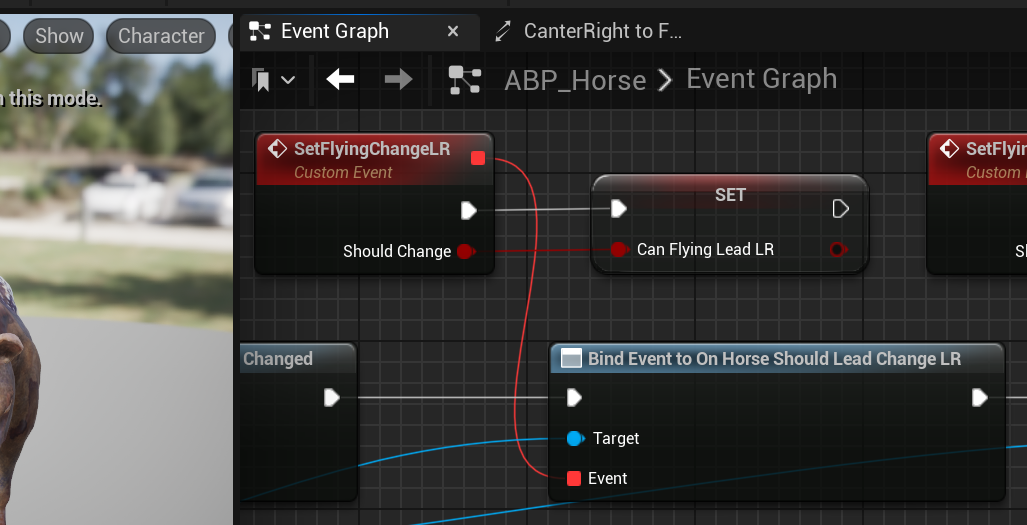
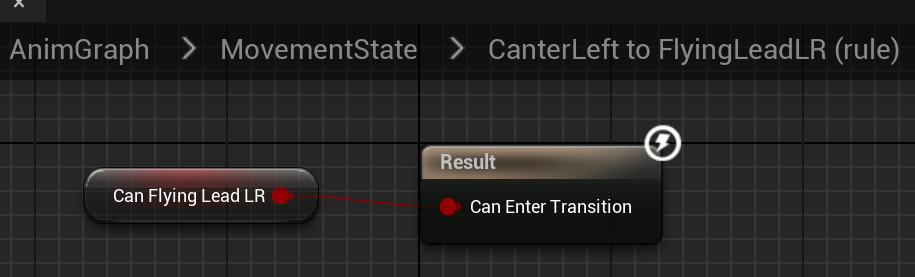
As with moving from the trot to the canter, there is a specific place in the canter animation where the flying lead animation should be played. So the code sets a boolean that the flying lead should happen, and then waits for the animation notify to trigger. The function behind the notify checks the boolean and broadcasts that the transition should happen. The ABP has bound to the delegate, and this broadcast causes a boolean in the ABP to be set. This boolean causes a state machine transition, and the flying lead animation is played.
Setting the boolean, then waiting for the anim notify to trigger.

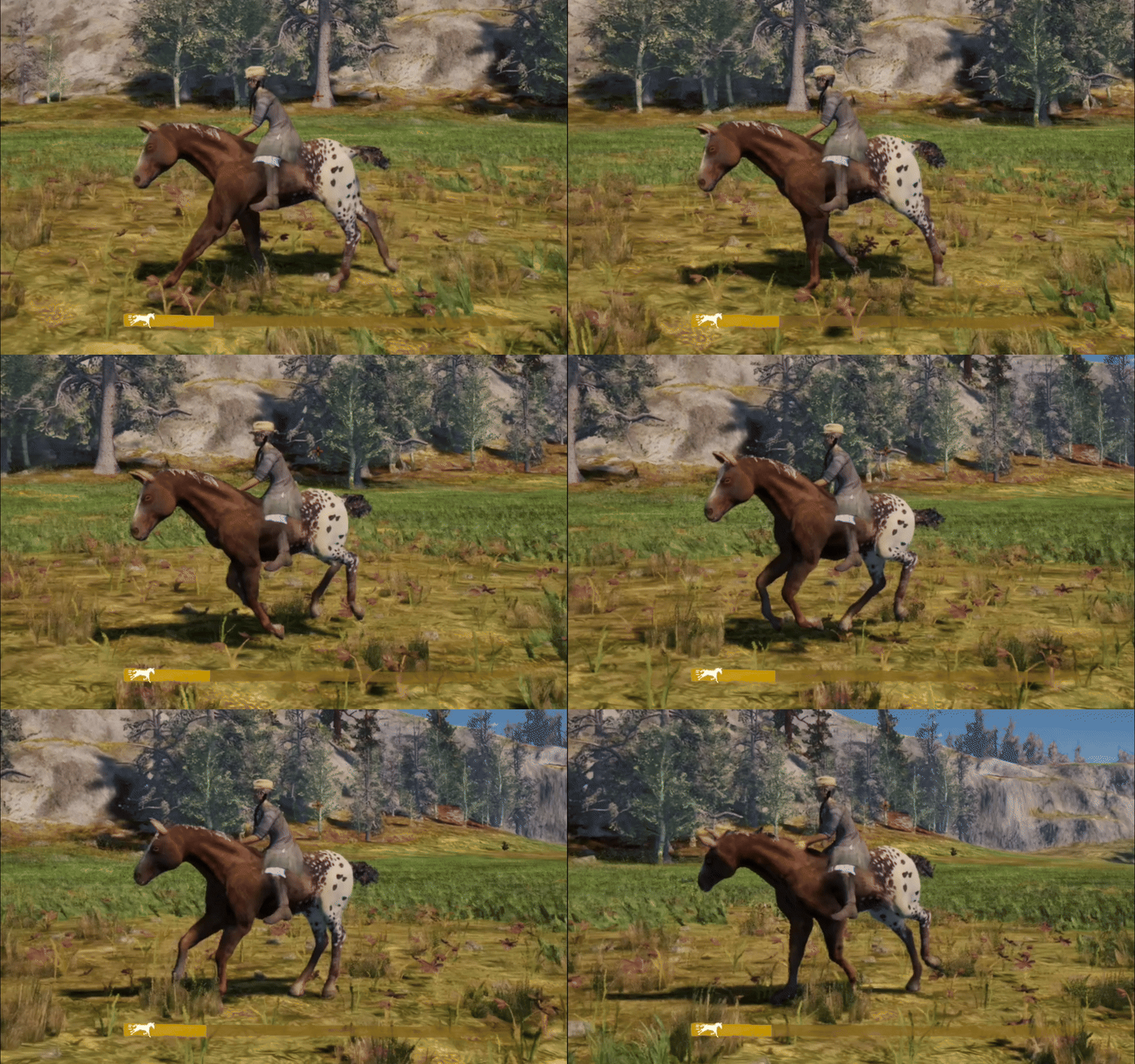
Does it Matter When the Flying Lead Change Animation is Played?
"It seems like a lot of work to set up when the animations should transition. Does it really look so bad if we execute the transition immediately when the player requests the new gait?"
So let's switch this around. Instead of saving the gait request, let's broadcast it immediately when the player starts turning the horse, and let's remove the anim notifies from the Left Lead Canter animation.

And this is the result:
See the hitch in the legs as the animations blend, but slightly out of sync? If we want our lead changes to look good, making sure the animations blend at the correct times is important!
Are Flying Lead Change Animations Really Necessary?
"Do we really need a flying lead change animation? Does it look that bad if we just switch from the Left Lead Canter animation to the Right Lead Canter animation?"
Let's do our best to make the animation switch look as seamless as possible. We'll remove the Flying Lead animation and have the Left Lead Canter state go directly into the Right Lead Canter state.
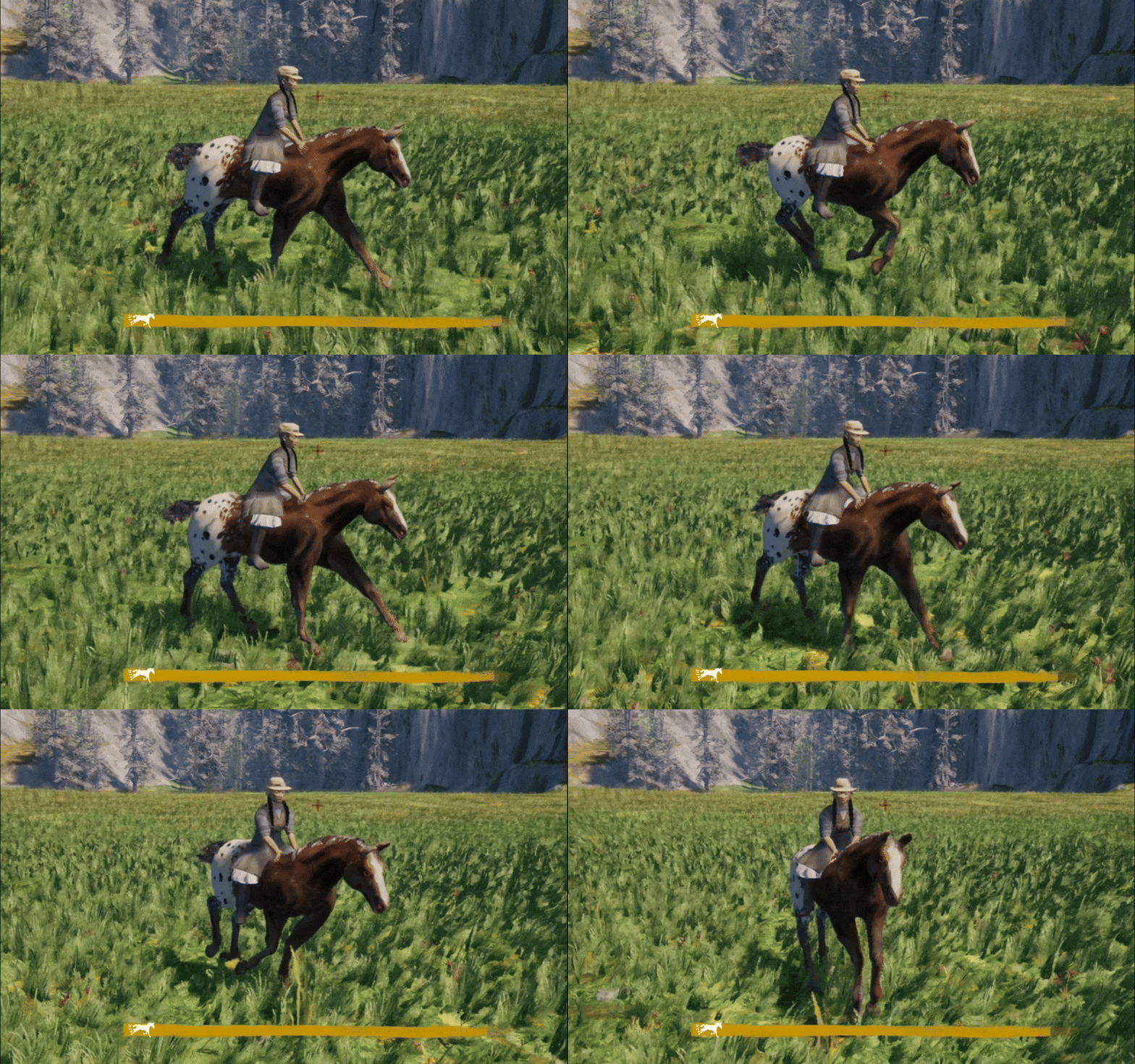
Here's the result:
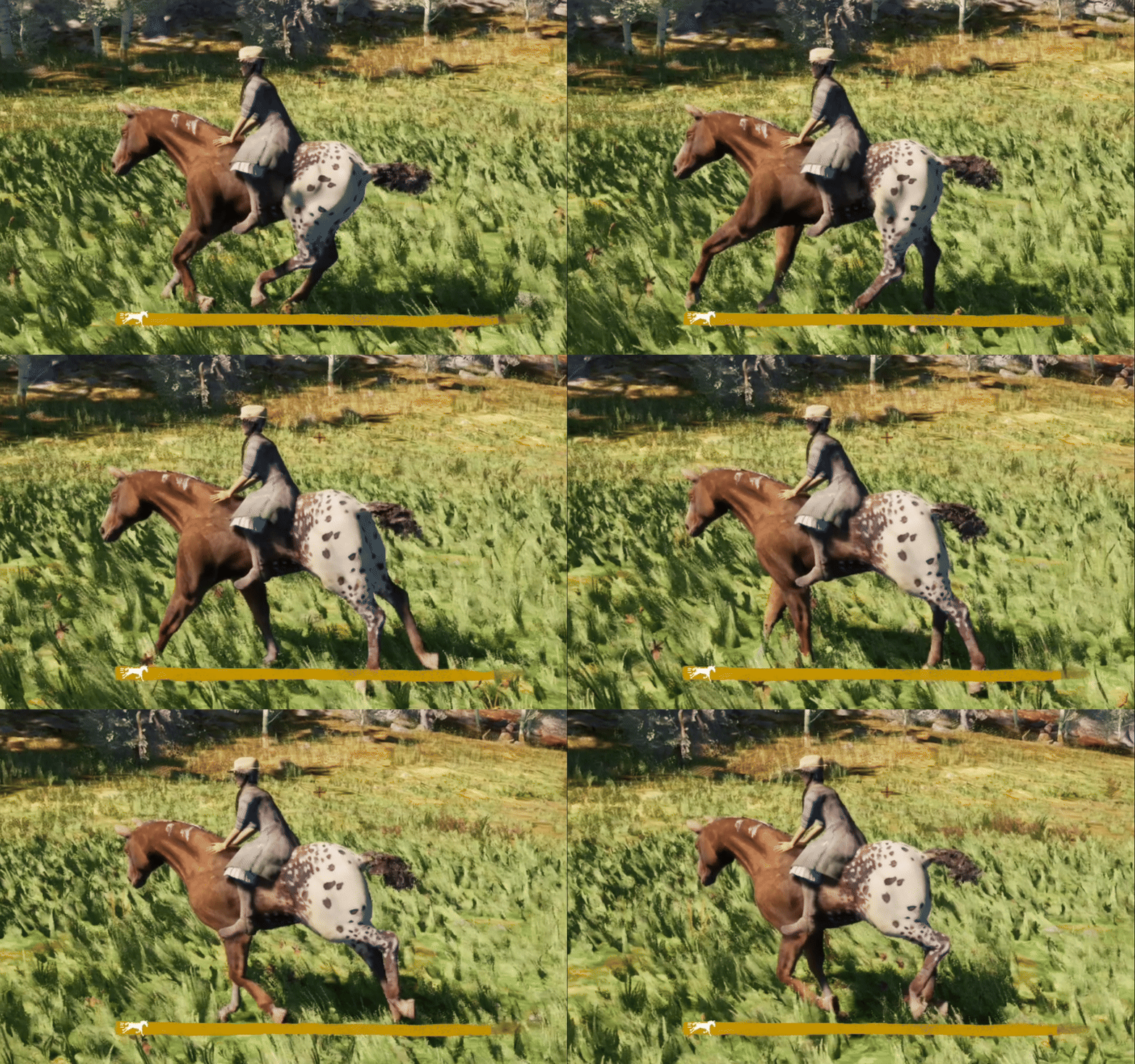
See the slide in the middle of the animation? All four legs blend in a strange sliding motion to where they are in the second animation.
Results
Check out my latest game: Wind's Heartbeat
And join the mailing list to stay updated! Wind's Heartbeat mailing list